
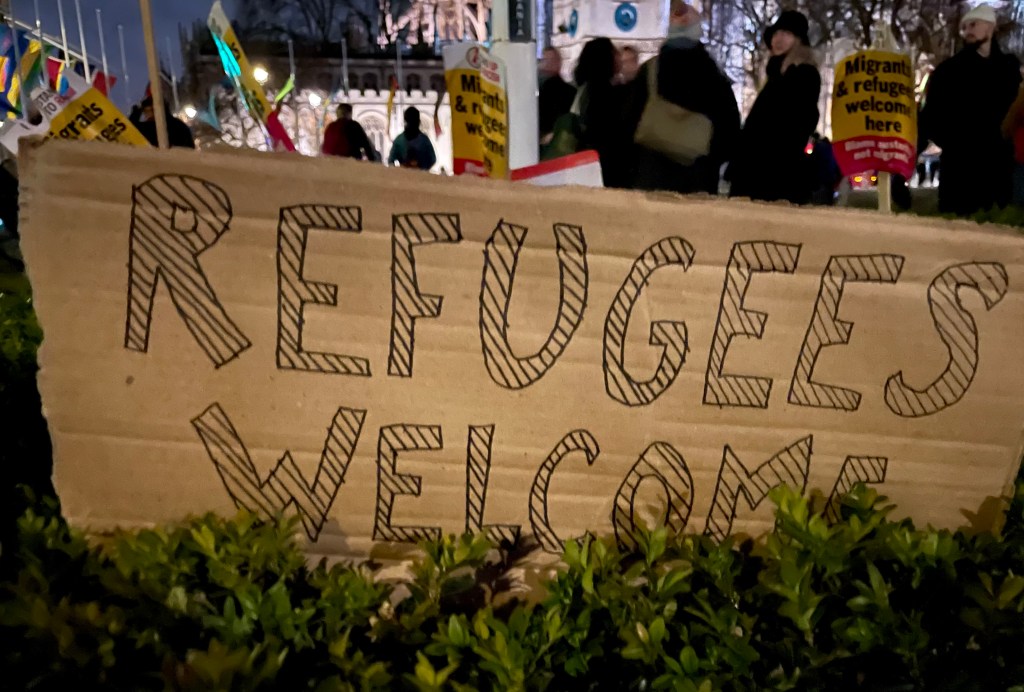
18th December marks International Migrants Day. At Waltham Forest Migrant Action, we celebrate and support migrants every day – and it has never been more important. Over recent months and years, anti-migrant rhetoric and hostile environment policies have become increasingly dangerous and dehumanising. Last August, we witnessed these first hand with far-right riots across the UK, including here in Walthamstow. But our community stood with migrants and spoke out against racism, Islamophobia.
We weren’t surprised by what we saw. Not a week goes by without another negative, baseless headline vilifying people seeking asylum and refugees. What is even more concerning is that these headlines are directly influencing policy making. From the previous government’s Rwanda scheme to the present government’s substantial increase in the number of deportations* people seeking asylum and refugees are scapegoated. Still, we watched in horror how the events unfolded on our doorstep, impacting the people we work with closely and come to us for support.
We know firsthand that people who undertake the perilous journey to Europe and on to the UK have very few options available to them. No-one would leave their home, family, and friends on a whim. These are people who are displaced, fleeing conflict, violence, war, persecution or the impact of the climate breakdown.
Leensaa’s story
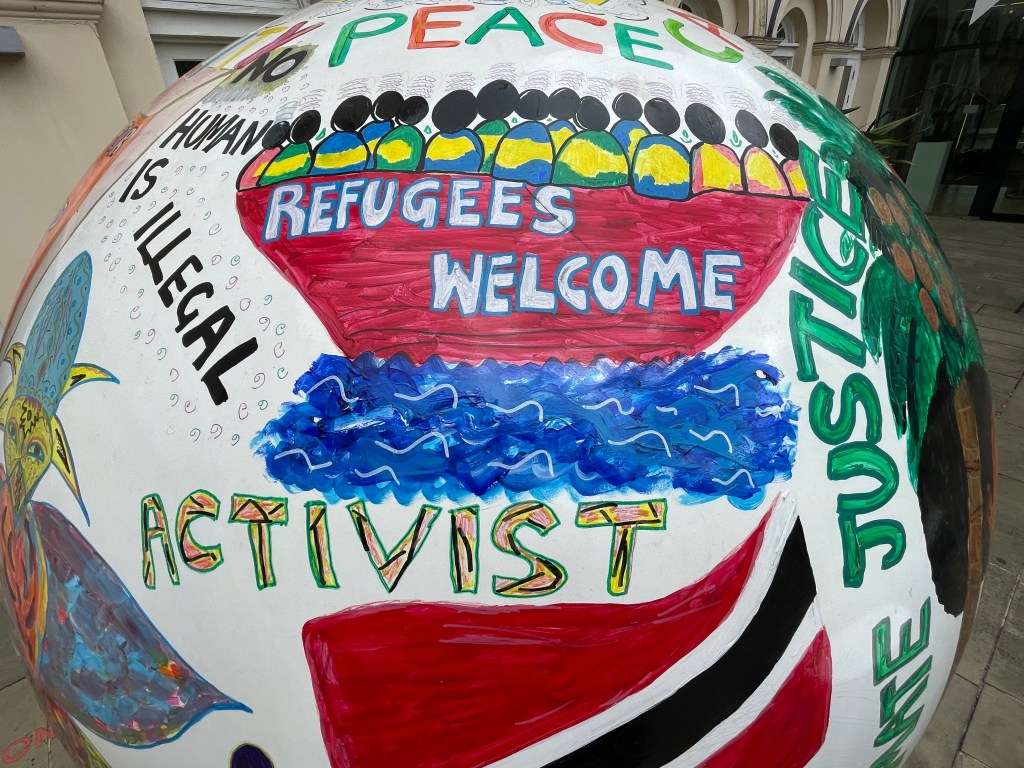
Leensaa is Ethiopian of Oromo origin. Despite being one of the largest ethnic groups, the Oromo people are persecuted in their own country. Thousands are held as political prisoners. Leensaa explains that her father ended up in jail too, which led her to become involved in the struggle as a young woman – and she soon followed the same fate. She was released from prison and under house arrest when her father was murdered in prison. Concerned for Leensaa’s safety, her mother advised her to escape. She did – leaving everything behind, including her seven-year-old son.
So began the long, arduous journey across the border into Sudan and onwards. Months spent in fear, hiding from authorities. The dangerous crossing from Turkey to Greece, when 40 people were herded into boat and eight ended up losing their lives – and somehow, she just had to keep going, until she reached the UK, hidden in the back of a lorry.
Upon arrival, Leensaa had nothing. She was questioned by the Home Office and had to wait two years for her indefinite leave to remain, living on a meagre allowance.* At the time, she lived in Northern England and volunteered at her local migrant centre, whilst also going to college to learn English.
As soon as she was allowed to work, she moved to London. Here, she was able to connect with the Oromo diaspora community and feel less isolated. She struggled to find accommodation, a job, and just as things started looking up, on her first day at work, she had a stroke. After more than four months in hospital, she was moved to a shelter and then her own place in Waltham Forest. The stroke had left her wheelchair-bound, facing a whole new set of challenges.
Still, she found the strength to apply for family reunion, so she could bring her son over to the UK. Five years had passed since she’d been forced to leave her little boy behind and despite the excitement of being reunited, things weren’t quite straightforward. Getting used to a new environment, language, food, as well as accepting that his mum was now using a wheelchair, took time, love, and patience to overcome – but they did it. She beams with pride when she mentions that he is now at university.
Meanwhile, Leensaa still volunteers. She is fluent in Oromo, Arabic, Turkish and English and provides free translation for people who come to the Waltham Forest Migrant Action Support Centre. She first came across the organisation when applying for citizenship, a three-year process that an adviser supported her with. This was the final piece in the puzzle to making the UK her home.
As she lay in hospital all those years ago, she had a realisation – despite everything, the loss, the trauma, she was alive, and this revived determination and hopes for the future. Now she studies creative arts to become a designer and sings in a band that are releasing their first album next year!
Notes
*Altogether, more than 25 bespoke returns flights have taken place since July 5th, returning individuals to a range of countries including Albania, Poland, Romania and Vietnam, plus the first ever charter to Timor-Leste, and the biggest ever returns flight to Nigeria and Ghana.
** Currently, the weekly allowance equates to just £49.18 a week, which is just £7 per day. This must cover essential needs such as food, clothing and toiletries, but also travel to appointments and any other expenses. For asylum seekers who are housed in hotels, they will receive just £8.86 per week for each person in their household instead.
 Waltham Forest Migrant Action