

Our take on Shabana Mahmood’s statement.
The ‘earned’ settlement proposals, presented on Monday 02 November to Parliament, are nothing short of ruthless, and will have a devastating impact on people seeking safety, families, workplaces and entire communities.
Before we examine the proposals in more detail, it is important to remember that earlier this year, WFMA, and over 200,000 others, took part in a consultation process to provide feedback on the proposals. A significant majority opposed them – 84% of individuals and 79% of organisations.
But it’s not stopping the Home Secretary from pressing ahead with her divisive, anti-migrant agenda.
In short:
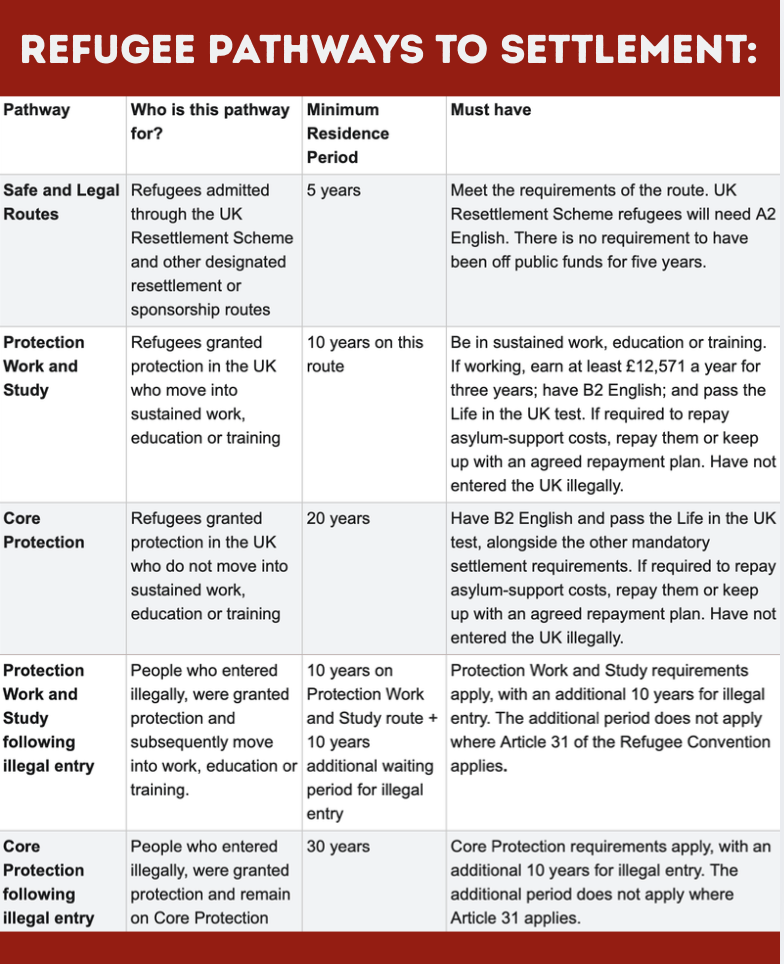
The standard qualifying (waiting) period for indefinite leave to remain (ILR) will go up from five to TEN years – with some exceptions. For the vast majority of applicants – e.g. anyone earning under £50,271 / year – it’s bad news, particularly for refugees who arrived to the UK by a route not deemed ‘legal and safe’. They will face a 20-year wait, and a further ten year wait – yes, that could take the total waiting period to up to 30 years! – for those who arrived ‘illegally’ and are not in sustained employment, education or training.
If you can stomach it, the tables below give more details about various settlement pathways – a system that is racist and classist to the core.
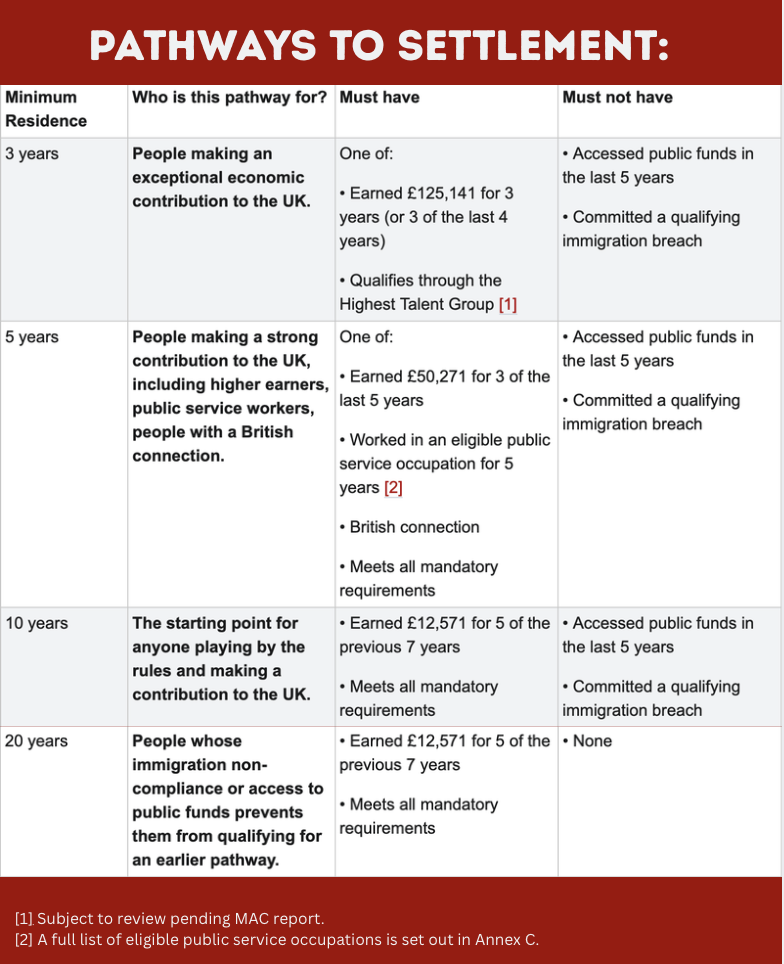
In addition, all applicants must fulfil the following mandatory conditions(to ‘earn’ the right to settle!) – including:
- No criminal record
- No unpaid government debt (e.g. NHS charges),
- Level B2 English proficiency (up from B1), and
- 3 years of National Insurance contributions – with a minimum salary of £12,571 – or a combined £25,142 for a couple.
You’ll note they dropped the volunteering idea – so some good news.
The main changes relate to care and public service workers – none of which would have happened without trade union organising.
Care workers who joined the Skilled Worker route before May 2025 and earned at least £25,000 per year will be eligible to settle after five years.
Those who do not meet these requirements (approx. a quarter) will be offered a further five-year visa extension, after which they can apply to settle.
Those who joined after May 2025 will be forced on the ten-year route. How these changes will affect dependants of Skilled Worker visa holders is yet to be announced.
The new settlement rules will apply to people who are already living in the UK but have not yet received settlement. They will come into force in 2027 – but we’re waiting for further details.
So where are we at?
We are facing sweeping reforms to the immigration system on two fronts – the ‘earned’ settlement proposals, outlined above, and which will likely be introduced by a Statement of Changes to the Immigration Rules; and the Immigration and Asylum Bill currently making it’s way through Parliament. Unlike a Bill, a Statement of Changes is difficult to challenge.
There are a number of campaigns encouraging people to write to their MP on both the ‘earned’ settlement proposals and the Bill – including from Joint Council for the Welfare of Immigrants and Refugee and Migrant Justice. We recommend you engage with both these campaigns. MPs need to urgently hear from constituents the level of opposition to both.
Before you write to your MP, find out what they said so you can tailor your message.
For more detailed analysis of the proposals, please check Free Movement, Right to Remain, the Electronic Immigration Network and Unison. Grateful for all the work that has gone in collectively to make sense of the changes ahead.

